
Gray Fox
from the series Selected Work, Limited Edition
ABOUT
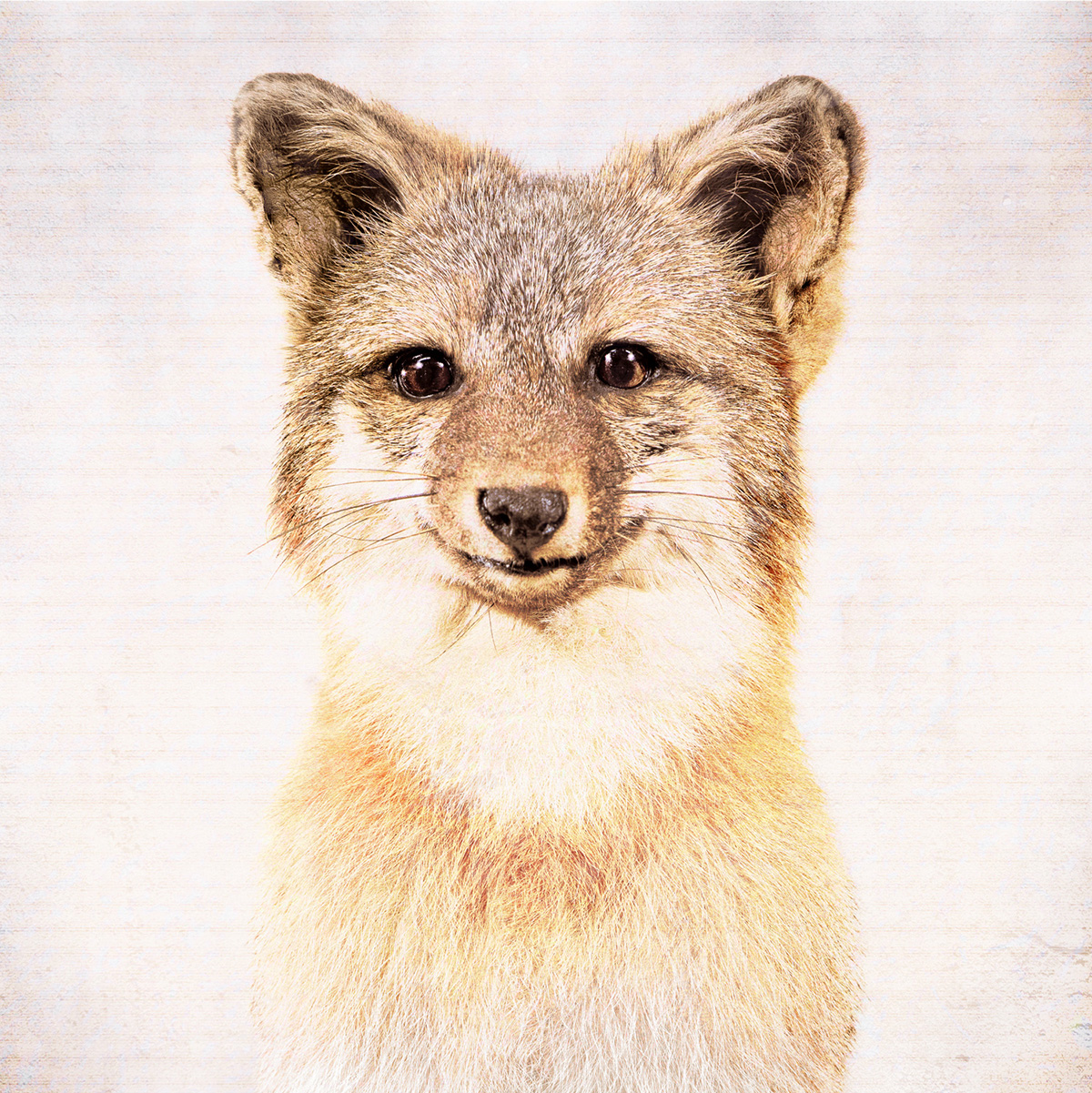
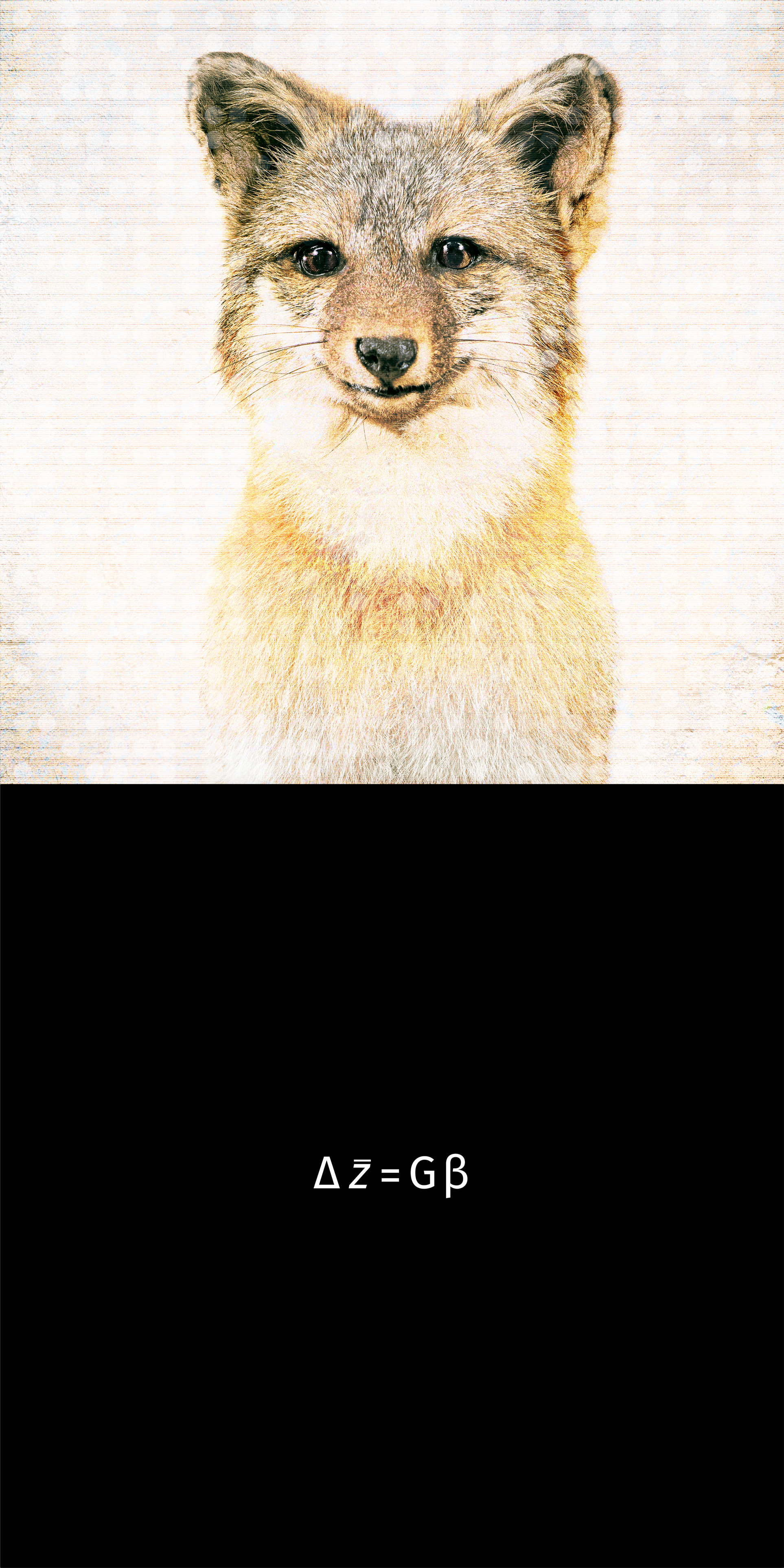
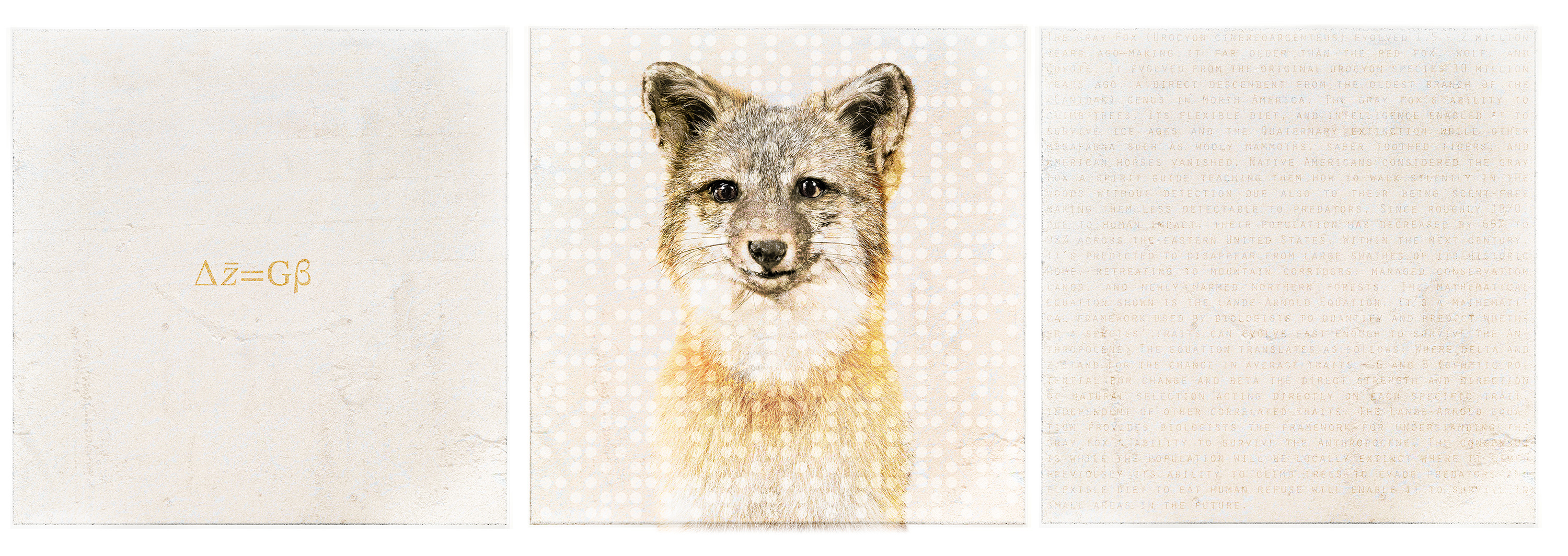
The Gray Fox evolved 1.5 to 2 million years ago—making it far older than the red fox, wolf, and coyote. It descends from the oldest basal lineage of the dog family (Canidae) in North America. The gray fox’s unique ability to climb trees, omnivorous diet and adaptability enabled it to survive ice ages and the Quaternary extinction event while megafauna such as woolly mammoths, saber-toothed cats and native horses vanished. Indigenous cultures considered the gray fox a spirit guide teaching them how to walk silently in the woods. Since 1970 their population has decreased by 65% to 98% across the eastern United States due to human impact. Over the next century, it’s predicted to retreat from vast areas of its historic range, relying on mountain corridors, managed conservation lands, and newly warmed northern forests. The Lande–Arnold Equation is used by evolutionary biologists to model whether a species can adapt fast enough to survive environmental change. It states that the change in average traits from one generation to the next (Δz) is equal to the population’s genetic potential for change (G) multiplied by the direct strength and direction of natural selection (β) acting upon those traits.