
Biophilia
from the series A/12e, 2026, Limited Edition
ABOUT
Attraction to nature is rooted in biology, genetics and human consciousness.
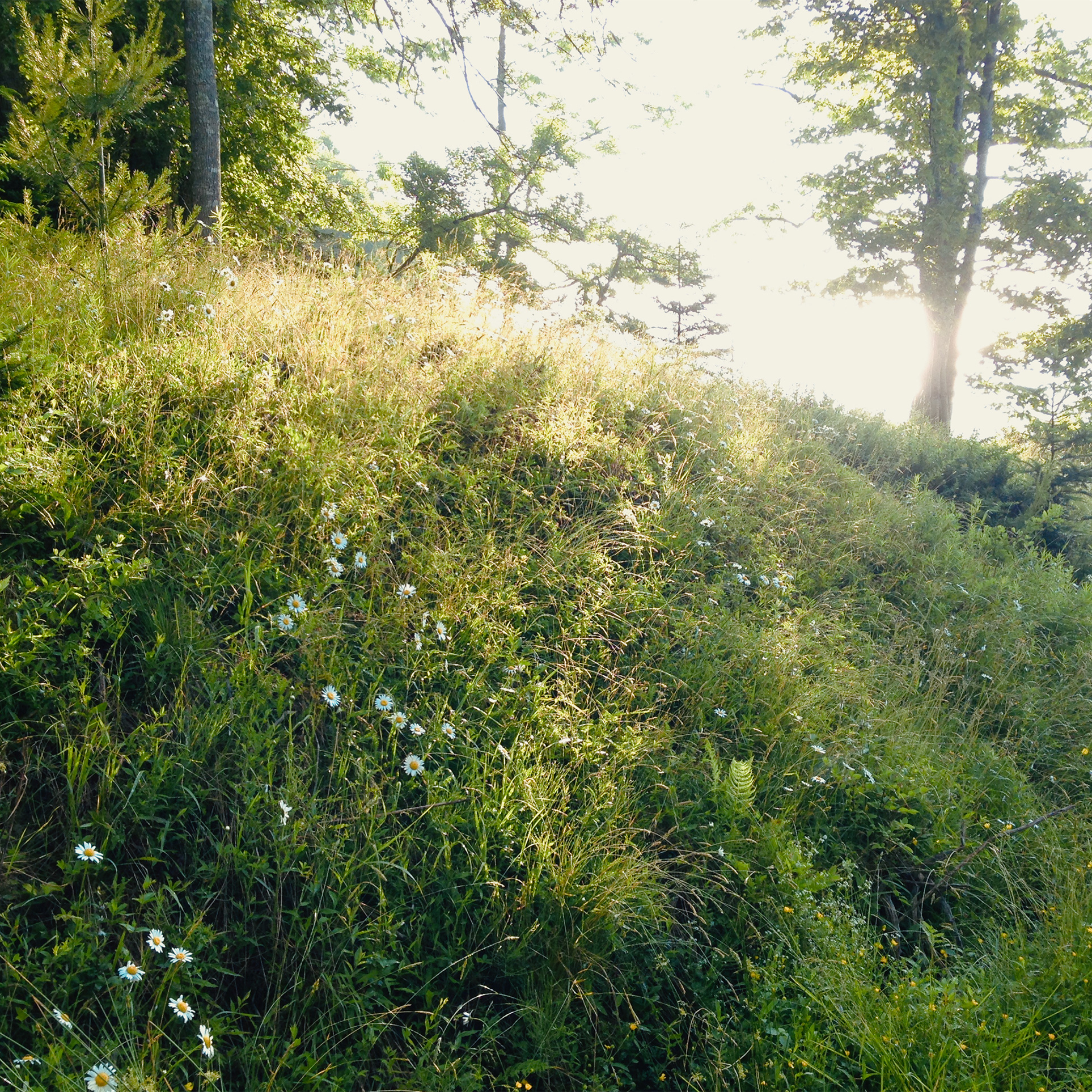
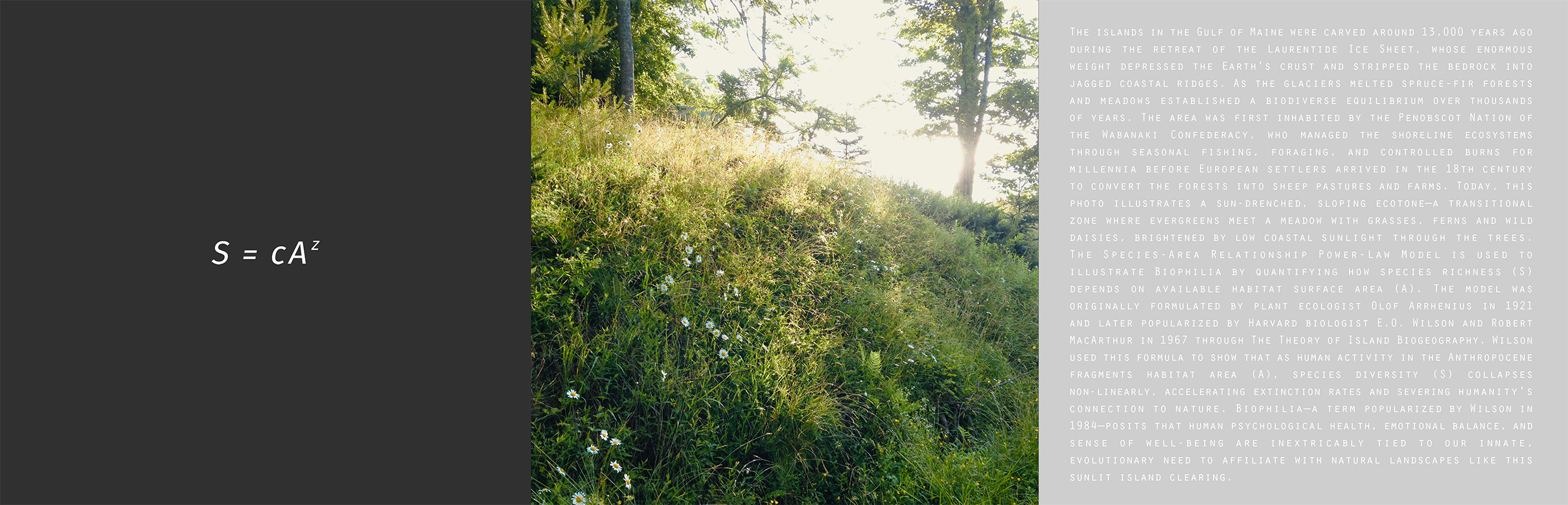
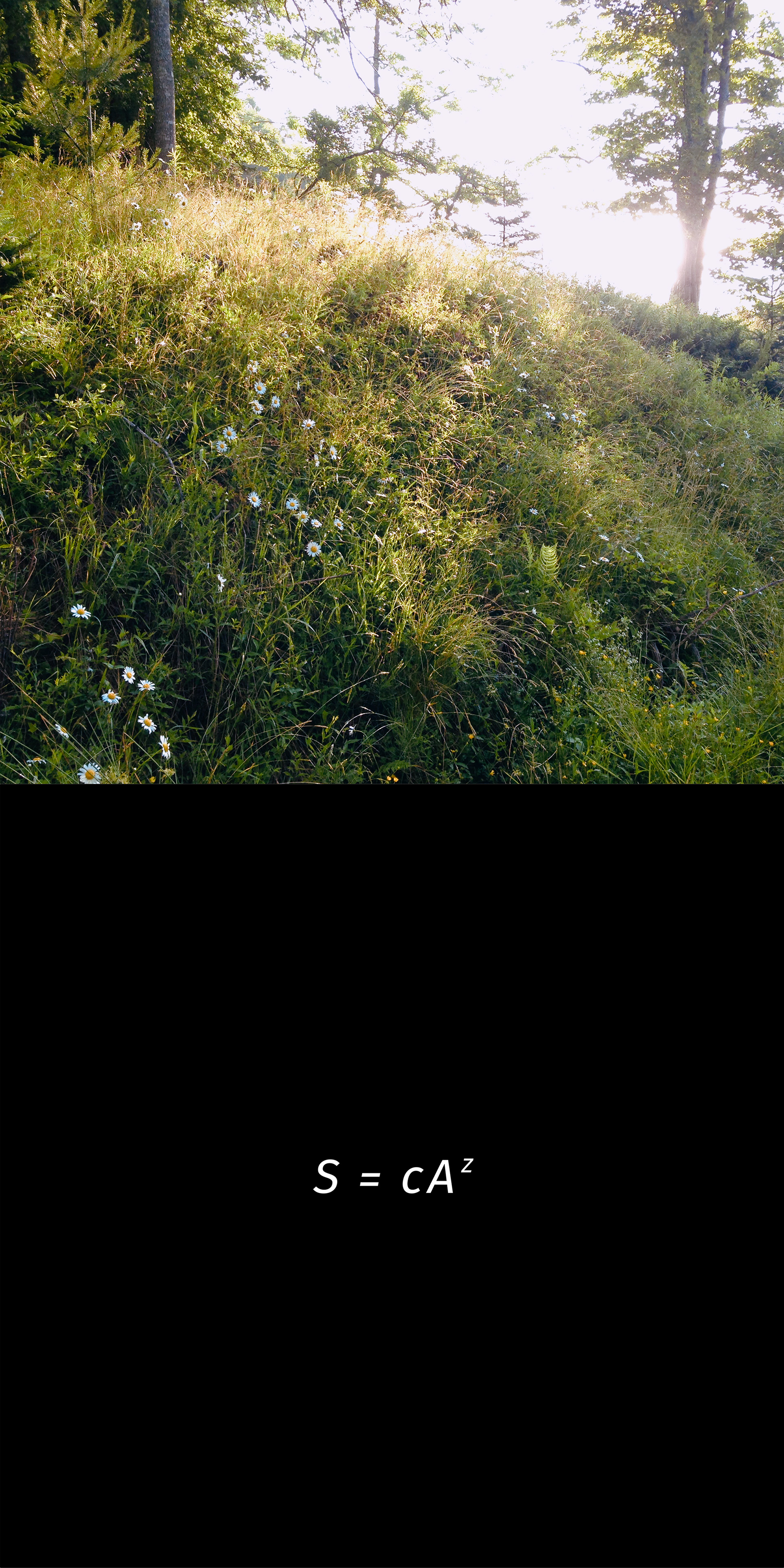
Gulf of Maine island landscape paired with the Species-Area Relationship Power-Law from the book A/12e (Anthropocene 12 equations) – section 09.
The islands off Maine were created around 13,000 years ago during the retreat of the Laurentide Ice Sheet whose weight stripped the bedrock forming an archipelago of islets where forests grew after the glaciers melted creating a diverse landscape for plants and animals to evolve. The area was first inhabited by the Penobscot, Passamaquoddy, Maliseet, and Mi’kmaq who managed the forests with controlled burns that increased habitat for fruit bearing shrubs like blueberries, black raspberries and cranberries, nut bearing trees like oaks, chestnuts and hazel, open space for hunting deer, moose and turkeys as well as reducing pests and making it easier to travel through the dense island forests – long before European settlers arrived converting the land into distinct sheep pastures and farms with stone wall dividers and grid like developments clashing with indigenous peoples’ non-linear, integrated view of the environment – a view based on kinship and respect for ecosystems and mutualism – a symbiotic relationship integrating spirituality and pragmatism. The Species-Area Relationship Power-Law Model is used to illustrate Biophilia by quantifying how species richness (S) depends on available habitat surface area (A). The model was originally formulated by plant ecologist Olof Arrhenius in 1921 and later popularized by Harvard biologist E.O. Wilson and Robert MacArthur in 1967 through The Theory of Island Biogeography. Wilson used this formula to show that as human activity fragments habitat area (A), species diversity (S) collapses non-linearly, accelerating extinction rates and severing humanity’s connection to nature – a belief more aligned with indigenous peoples’ experience of nature – a belief that psychological health, emotional balance and a sense of well-being are tied to our innate, evolutionary need to assimilate with landscapes like this sunlit island clearing.