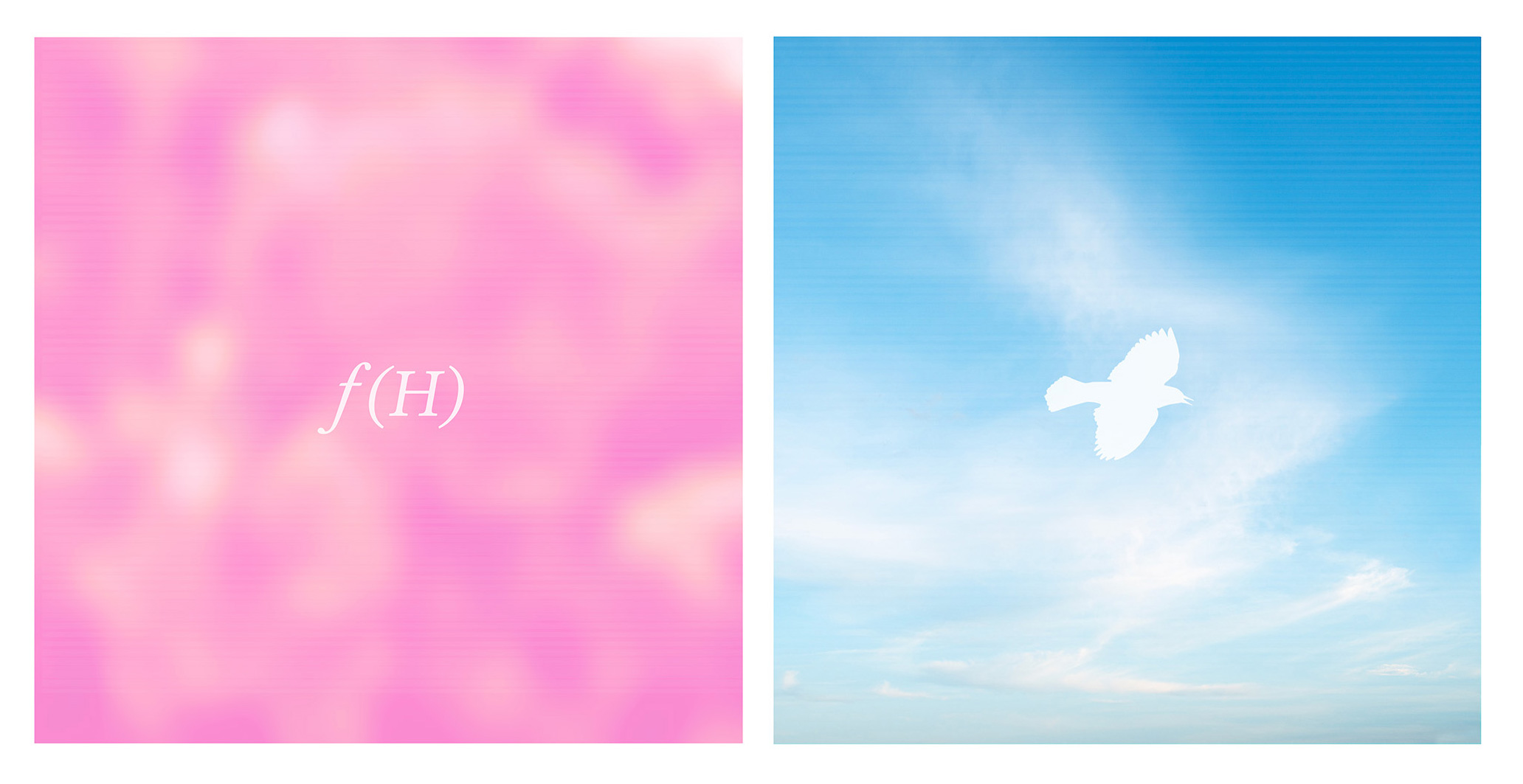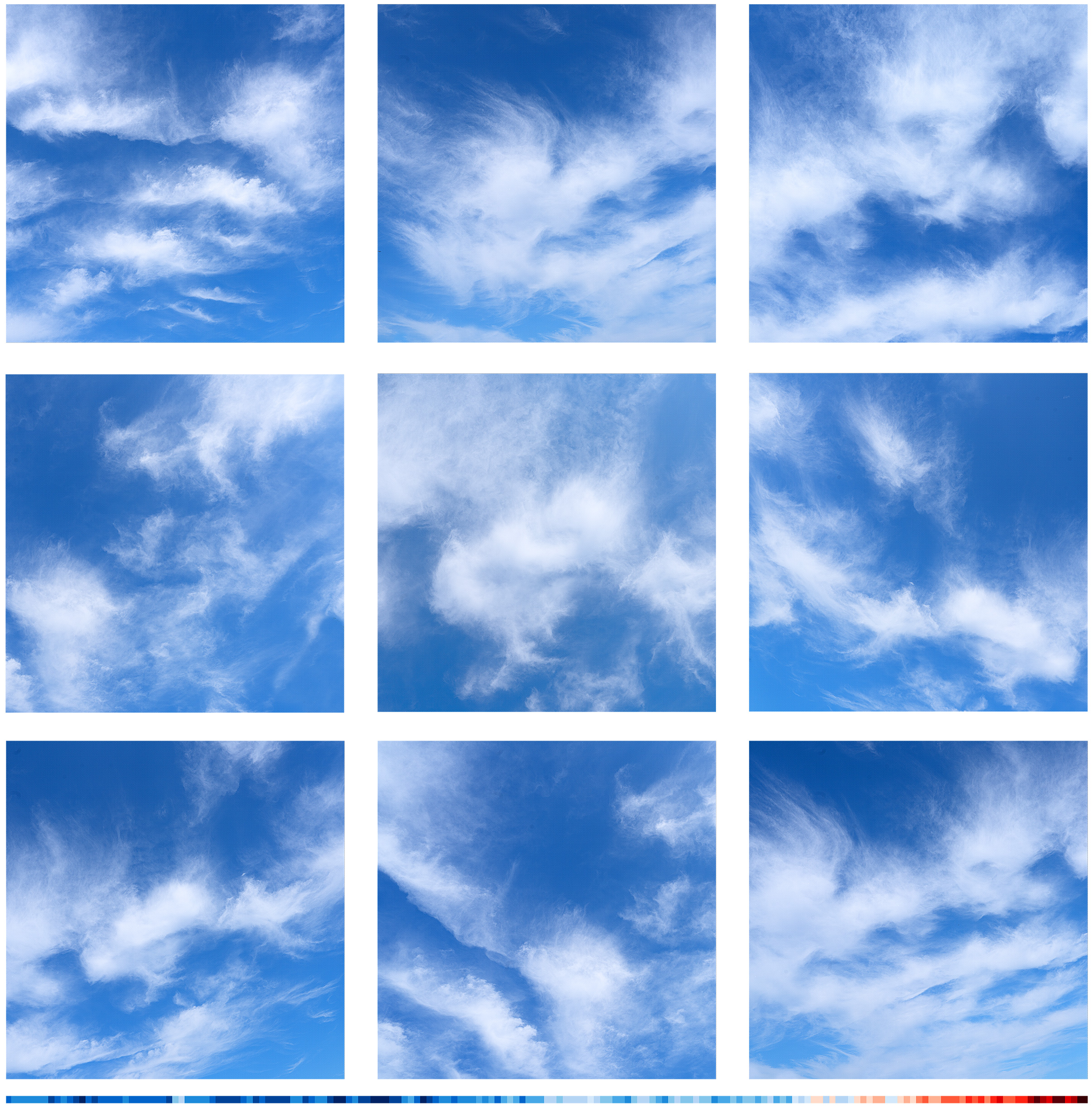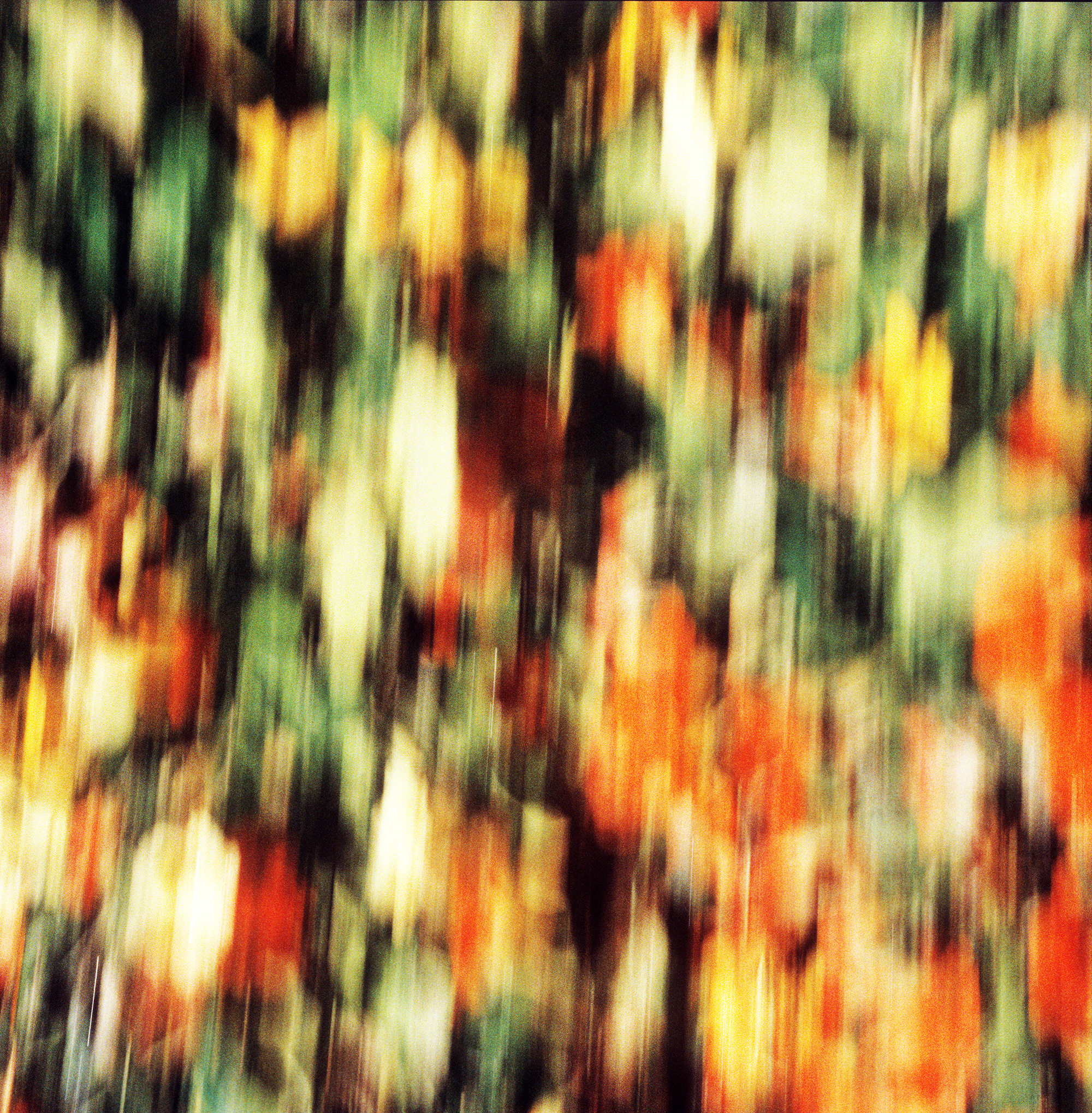
DayStream is a series of images using a Hasselblad medium format camera. The shutter is left open as the camera is moving, producing a blur. The images are straight photographs using Ektachrome 64 and Agfa 1000 transparency film and aren’t manipulated with digital software. The images are unique to a camera’s capabilities, creating pictures the human eye can’t see but nonetheless evoke emotions such as speed, instability and beauty.
I first started experimenting with this technique while taking a film class with Barry Gerson at RISD. Barry was a formalist who emphasized how film cameras work e.g. focus, zoom, and shutter speed like formalist painters focussed on paint, color and composition.
He showed us seminal films by Stan Brakhage (Dog Star Man), Ernie Gehr (Serene Velocity), and Michael Snow (Wavelength). These were truly inspiring at an impressionable age. See work done during this time period in the series Filmstrip.
The Anthropocene is a proposed name for the geologic epoch we live in today and refers to human effects on the planet’s ecosystems. Anthro is the Greek word for human.
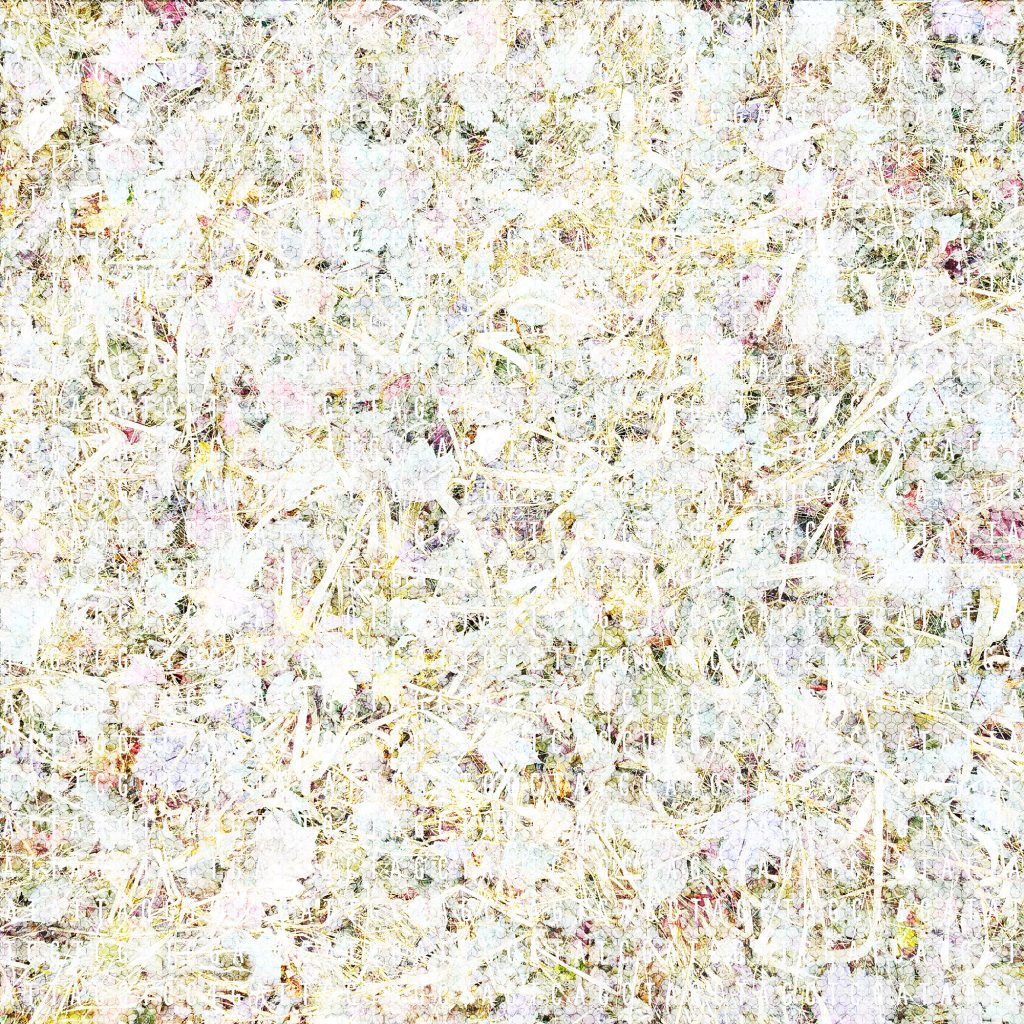
The images I’ve created are inspired by the Anthropocene and our changing relationship with nature, specifically how we perceive nature and the impact we’ve had. Embedded in the images, seen to varying degrees, are hexagonal and square grids, lines, the letters ATCG and other graphics. These reference ways that we analyze the world (cartesian grids), how we display information such as molecules (hexagons), and the genome (ATCG). The work doesn’t require knowing this background, it’s just a part of how and why they were constructed.
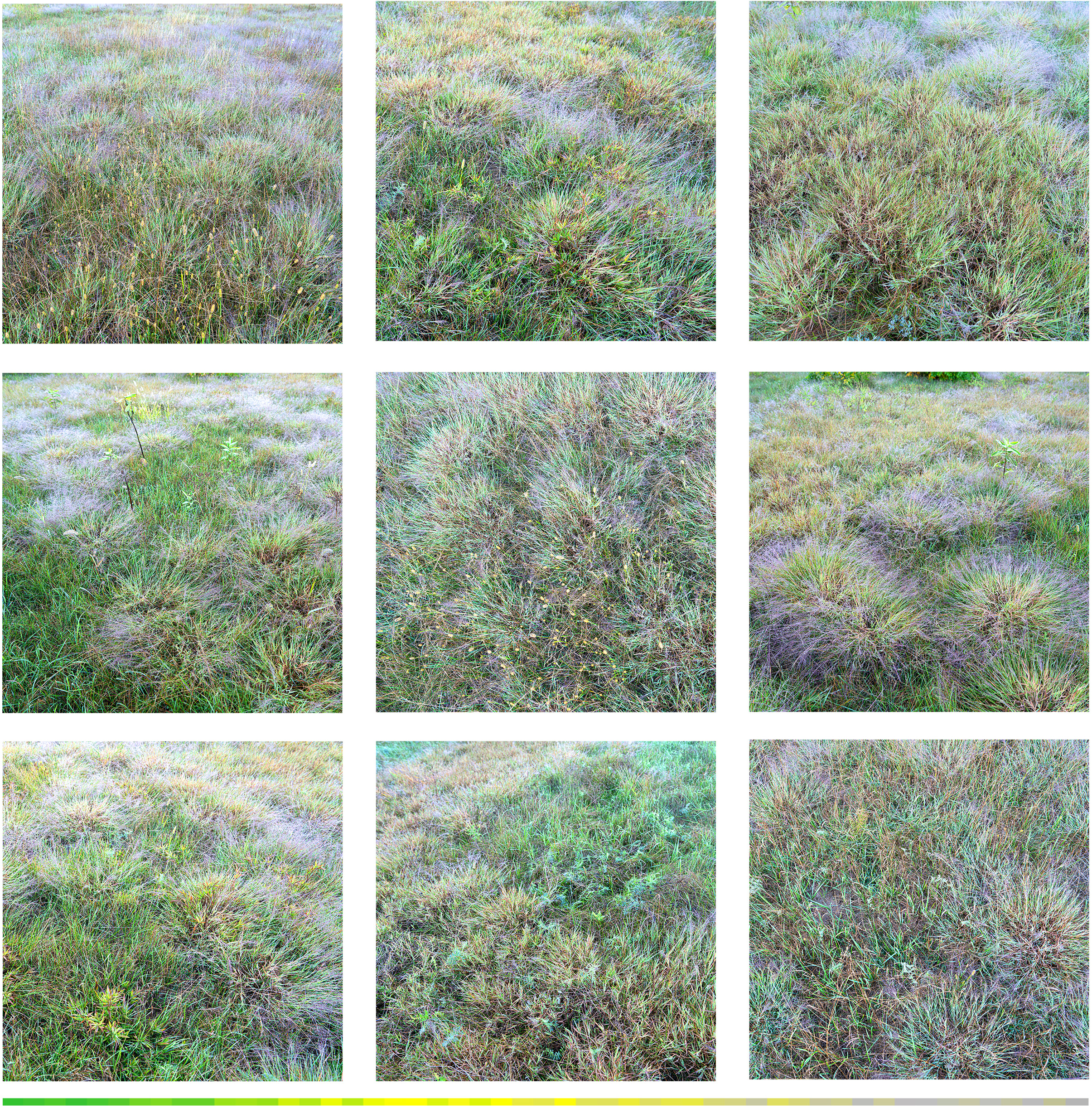
The images were captured with a Sony a7 IV or a Sony RX100 often pointed at flat surfaces such as grass, leaves, or pebbles on a beach or other natural elements like clouds, flowers, and water. The surface area represents a substrate – one layer of nature. The photos embed info-graphics (grid, hexagon) into this natural substrate as a way of alluding to how we view and affect nature whether it be a blade of grass or a dirt road with elements such as carbon, pollutants, or construction. The point is we have impacted everything on a nano to macro scale – not just more powerful hurricanes and sea level rise but the whole natural environment in subtle and dramatic ways.
I first started using grids and graphics and embedding them in images back in the 1980s using early digital imaging and analog processes. Since that time I’ve explored combining natural and graphic structures. These images are the latest investigation into combining human-made elements and nature. The subject matter is nothing dramatic, just what we see every day. The goal is to show what we see in a way that is unique to our present time.
I’ve been reading about Epigenetics lately and how it relates to the Anthropocene. Epigenetics is a molecular process whereby human-caused environmental changes (e.g., pollution, climate change, invasive species) affect plant and animal behavior through changes in genetic expression but not the underlying genetic markers.
For example plants exposed to car exhaust, which contains high levels of nitrogen oxides, can stress plants out, delaying the production of flowers. Or other air born pollutants like nitrate radicals can degrade the natural chemical scents of flowers resulting in diminished fragrances otherwise referred to as ‘scent pollution’.
Epigenetics and the specific process of how gene expression changes via DNA Methylation is not without controversy. It seems like there’s a split between old and new school geneticists in how they understand these genetic expression changes are happening but there is consensus that they are happening and there’s significant investment to understand the impact of human caused pollution on crop yields as well as many other applications. It’s predicted that climate change could reduce crop yields for corn and soybeans in the US by as much as 20% by 2050. Extensive research is being done to understand how to manipulate epigentics to increase these crop yields.
But what inspires me here is not just the macro impacts these changes are having but how everything has changed now in nature on a small scale, in an everyday type of way. How every leaf, every blade of grass, every flower, every drop of water, is now different on a cellular level from human impact. As Bill McKibben wrote in his book “The End of Nature” there is no more wild in wilderness. We’ve changed it all and we’ll be changing it a lot more the years and centuries to come.
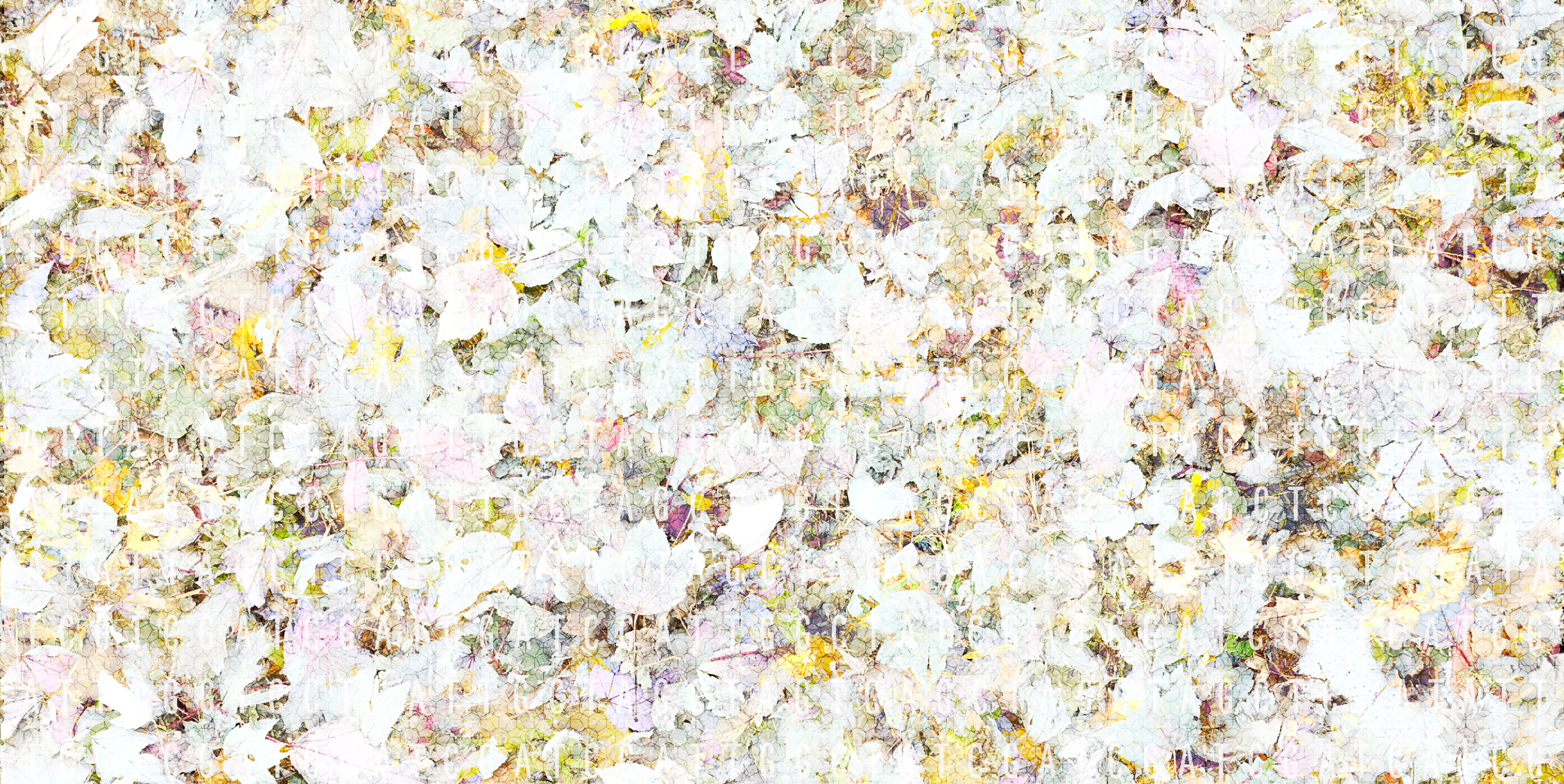
Here’s an image titled Methylation.
It’s a photo collage of leaves and grass, embedded with the letters ATCG and hexagon graphics referencing DNA and molecules.
While everything has changed, that’s not new, everything is always changing – what’s new is all the stuff we’re putting in the atmosphere and soil and all the forests and fields we’re destroying is impacting everything on a cellular level and changing plant and animal behavior. Pretty creepy but also not surprising. I wonder what nature will be like in 50 years or 500 years or 5,000 years from now. There’s so much that we know and don’t know but what’s for sure is humans will continue to manipulate the environment without much understanding or care of how we are impacting eco-systems, plants, animals and ourselves.
It’s hard photographing birds. They move fast in and out and up and down. It’s hard to focus even with auto-focus cameras but sometimes it’s possible. It just takes a lot of patience and trial and error. I’ve tried to photograph birds for quite a while with limited success. These came out pretty well I think.
This is a Common Tern or maybe an Artic Tern and was photographed on an island in Penobscot Bay Maine called Islesboro. Terns are a part of the subfamily Sterninae, of the family Laridae, which also includes gulls. Here’s another view.
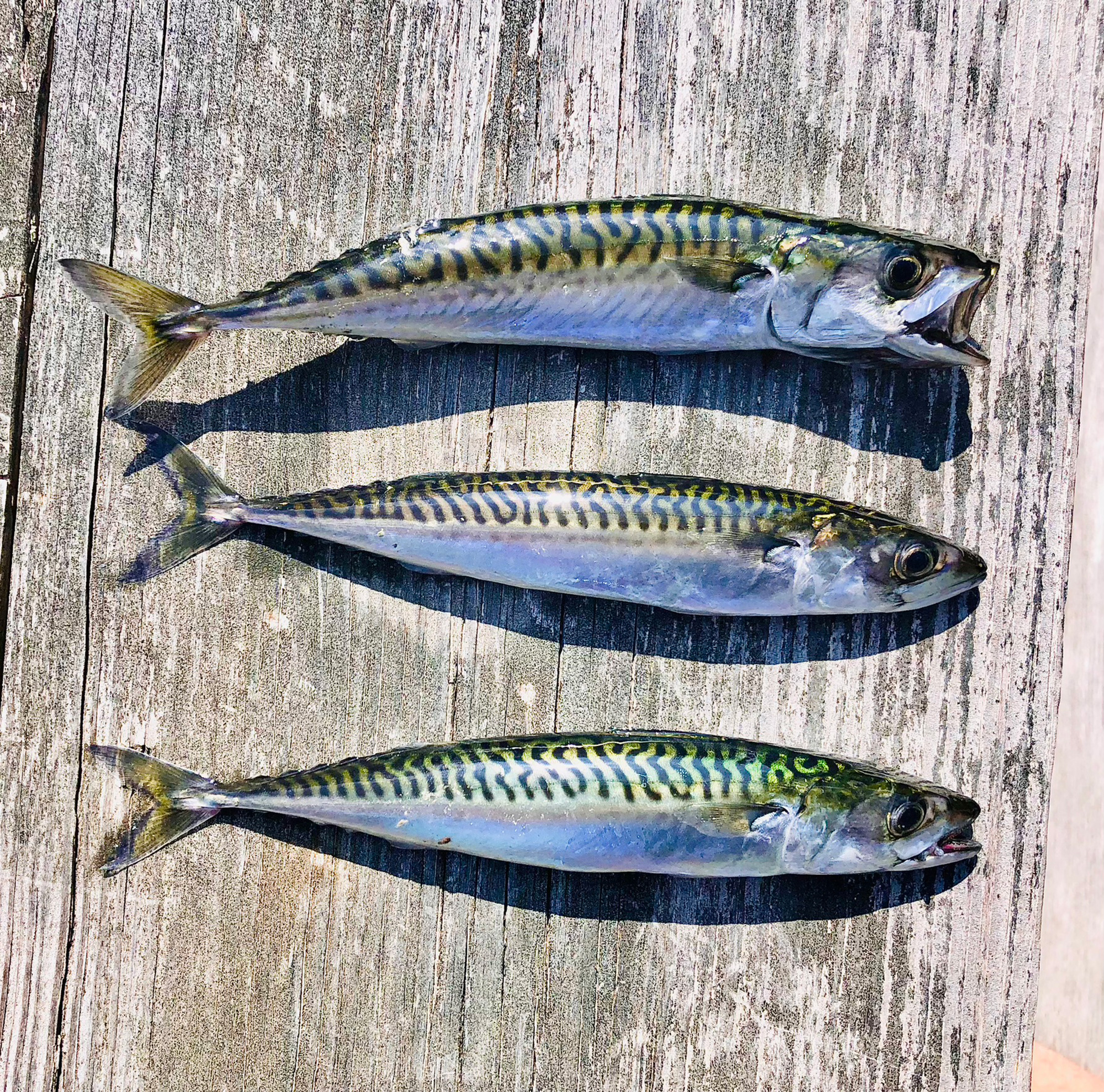
Some years I get lucky fishing from a kayak off Islesboro Maine. This year was one of those years, no more than a minute after dropping a line I had 3 mackerel! There used to be a lot more when I was a kid but great to see there are some left. We used to call these tiger mackerel because the stripes look like tiger stripes. They are quite tasty especially if you eat them right away. I used a ‘Christmas Tree’ lure which has multiple hooks with different colors. Since mackerel swim in schools this type of lure is a great way to land multiple fish at once.
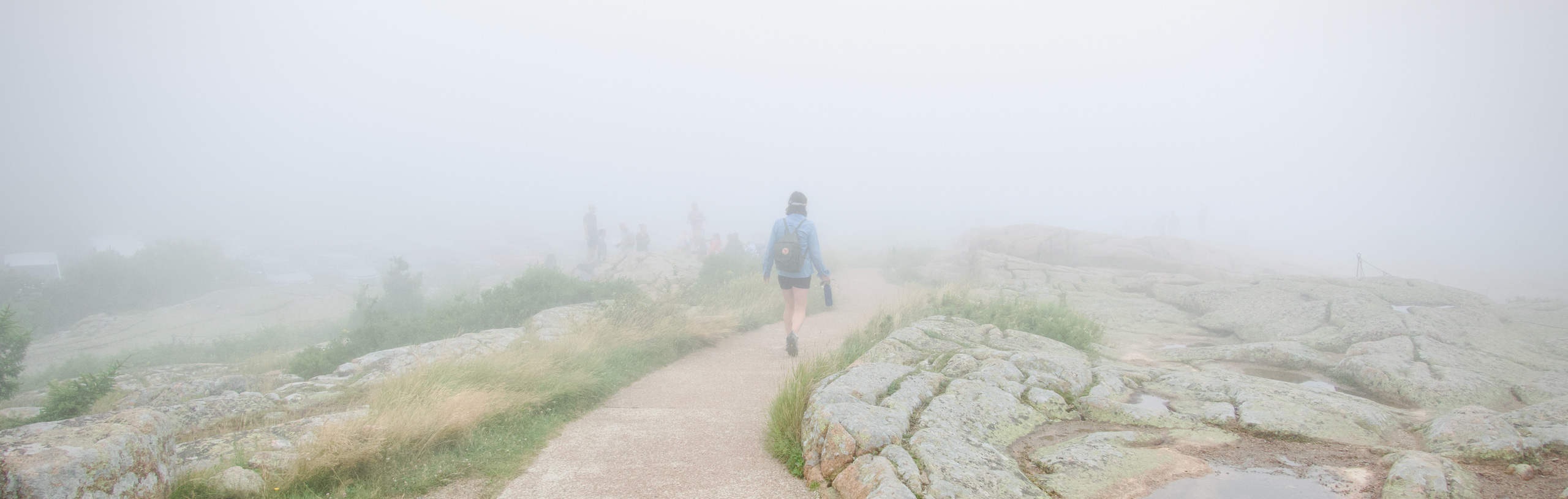
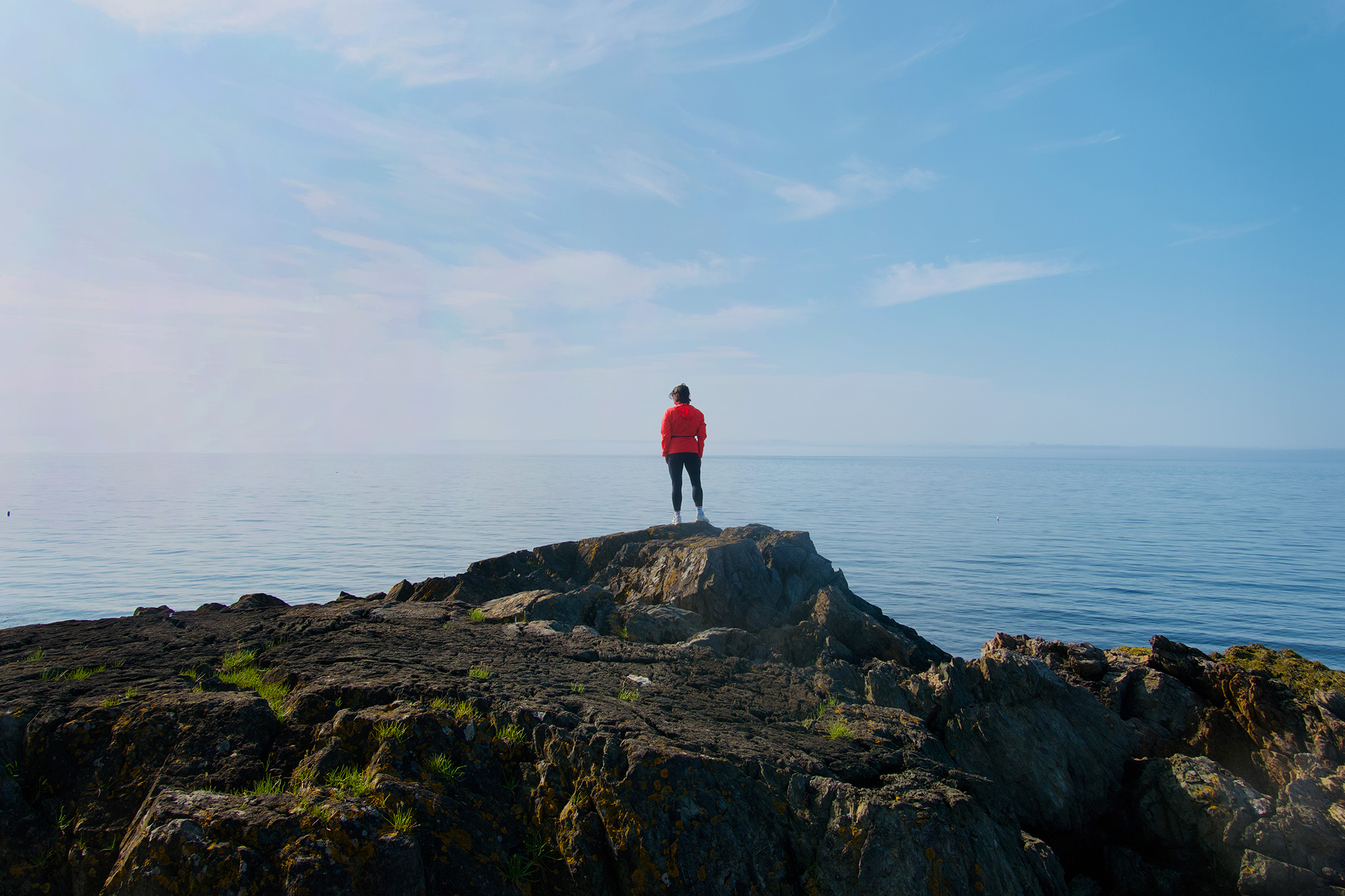
This was taken on the southern tip of Islesboro, an island in Penobscot Bay Maine. The area is called Town Beach and faces south towards North Haven and Vinal Haven. The rocks in this area have a flat top with distinct striations that show the north-south movement of glaciers.
The picture is of a friend who is a painter who particularly likes German Expressionist paintings. With her back to the camera, it coincidentally and somewhat comically mimics ‘Ruckenfigur’ (literally ‘back-figure) a compositional technique made popular by Caspar David Frederich and his painting Der Wanderer über dem Nebelmeer (Wanderer above the Sea of Fog).
It’s rained a lot lately. I like to photograph rain on water and the concentric circles the drops create. Since water is reflective it’s tricky to get a shot of rain drops without a lot of tree reflections. This photo was taken near where I live of a vernal pool. I’m not sure how the reflection was diminished, maybe since there were so many rain drops it broke up the tree reflections.
This is a photo of Ali, the nephew of a long-time friend Feisal. Ali went to art school so we have much in common. This was taken at the Pompidou Center in Malaga Spain from inside the glass door entrance so the lettering is reversed. There’s something about this photo I really like – the colors, the diagonal, the palm trees, the family on the right, and the overall lightness from the Mediterranean nearby as well as Ali’s pleasant expression and casual cigarette.
Malaga has multiple contemporary art venues in addition to the Picasso Museum and other more historic cultural showcases. Here’s a painting from the Contemporary Art Center (CAC).
The wide flat Mediterranean sea looking towards Morocco contrasts with the dense city streets of Malaga Spain. A city known for its cuisine, beaches, and nightlife. It’s one of the world’s oldest continuously inhabited cities dating from 770 BC first by the Phoenicians then by Romans, Moors, and Christians.
Even though mobbed by British and other tourists, the city has kept its Spanish flare as shown in this ad. Never shy and comfortable with its outward passione, the city has an energetic, inspiring, and positive vibe.
Had the pleasure of taking a yoga class at Parvati Yoga in the Soho district. The photo of a mural below covers an entire wall adding to the serenity at Parvati. A 90-minute class turned into 2 hours of moderate to intense stretching and strengthening. Hats off to Parvati and Malaga yoga.
Had the pleasure of visiting Malaga Spain. A beautiful ancient and modern city with many tourists who flood the historic center with its narrow streets. The nightlife often goes till near dawn, both locals and visitors enjoying southern Europe’s passione.