
Biowealth
from the series A/12e, 2026, Limited Edition
ABOUT
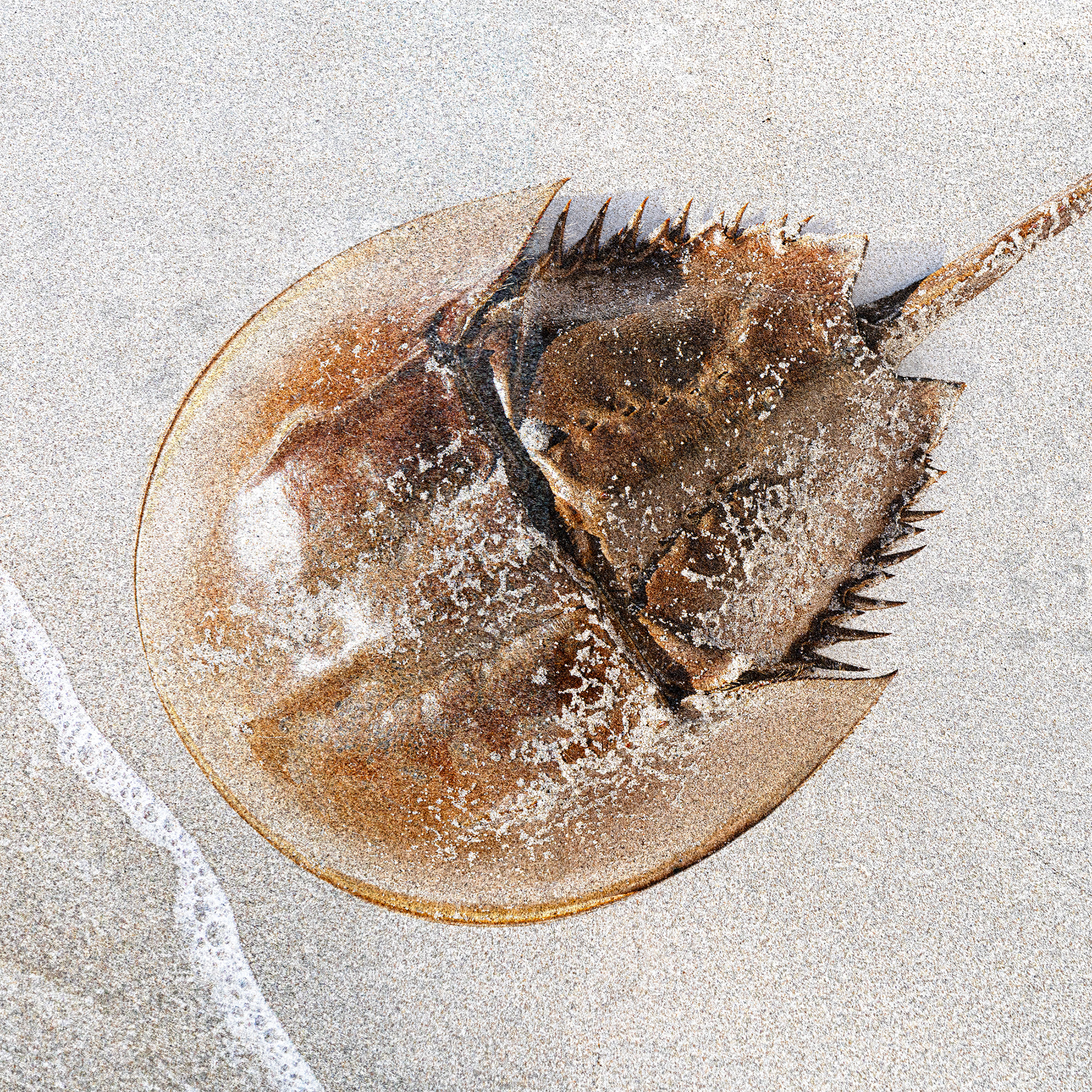
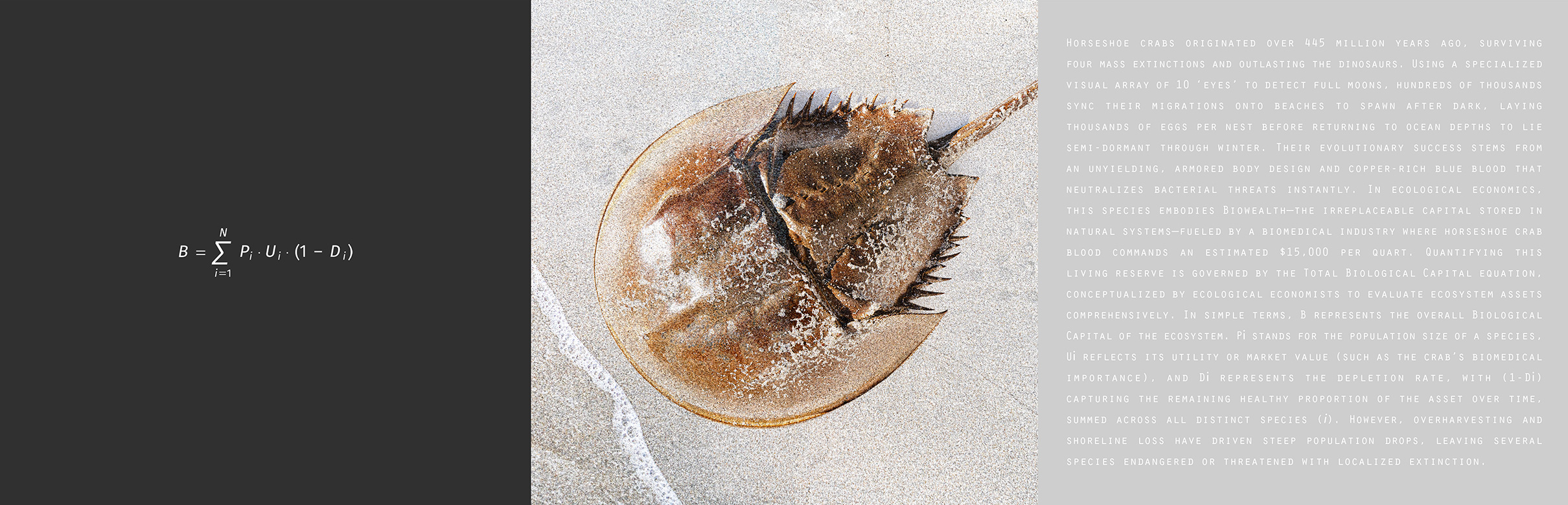
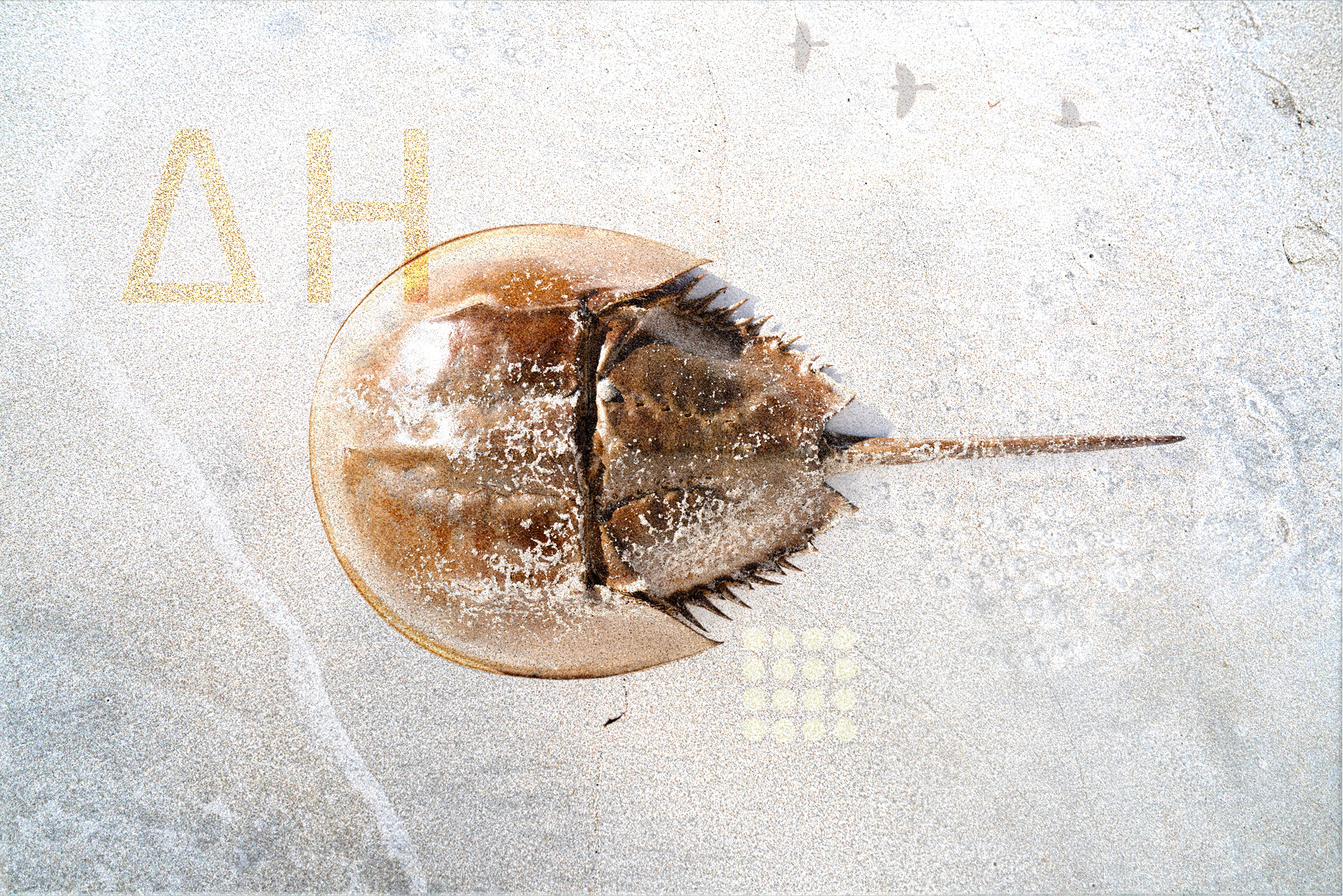
Horseshoe crab paired with the Total Biological Capital equation from the book A/12e (Anthropocene 12 equations).
Horseshoe crabs originated over 445 million years ago, surviving four mass extinctions and outlasting the dinosaurs. Using a specialized visual array of 10 ‘eyes’ to detect full moons, hundreds of thousands sync their migrations onto beaches to spawn after dark, laying thousands of eggs per nest before returning to ocean depths to lie semi-dormant through winter. Their evolutionary success stems from an unyielding, armored body design and copper-rich blue blood that neutralizes bacterial threats instantly. In ecological economics, this species embodies Biowealth—the irreplaceable capital stored in natural systems—fueled by a biomedical industry where horseshoe crab blood commands an estimated $15,000 per quart. Quantifying this living reserve is governed by the Total Biological Capital equation, conceptualized by ecological economists to evaluate ecosystem assets comprehensively. In simple terms, B represents the overall Biological Capital of the ecosystem. Pi stands for the population size of a species, Ui reflects its utility or market value (such as the crab’s biomedical importance), and Di represents the depletion rate, with (1-Di) capturing the remaining healthy proportion of the asset over time, summed across all distinct species (i). However, overharvesting and shoreline loss have driven steep population drops, leaving several species endangered or threatened with localized extinction.