
Entropy
from the series A/12e, 2026, Limited Edition
ABOUT
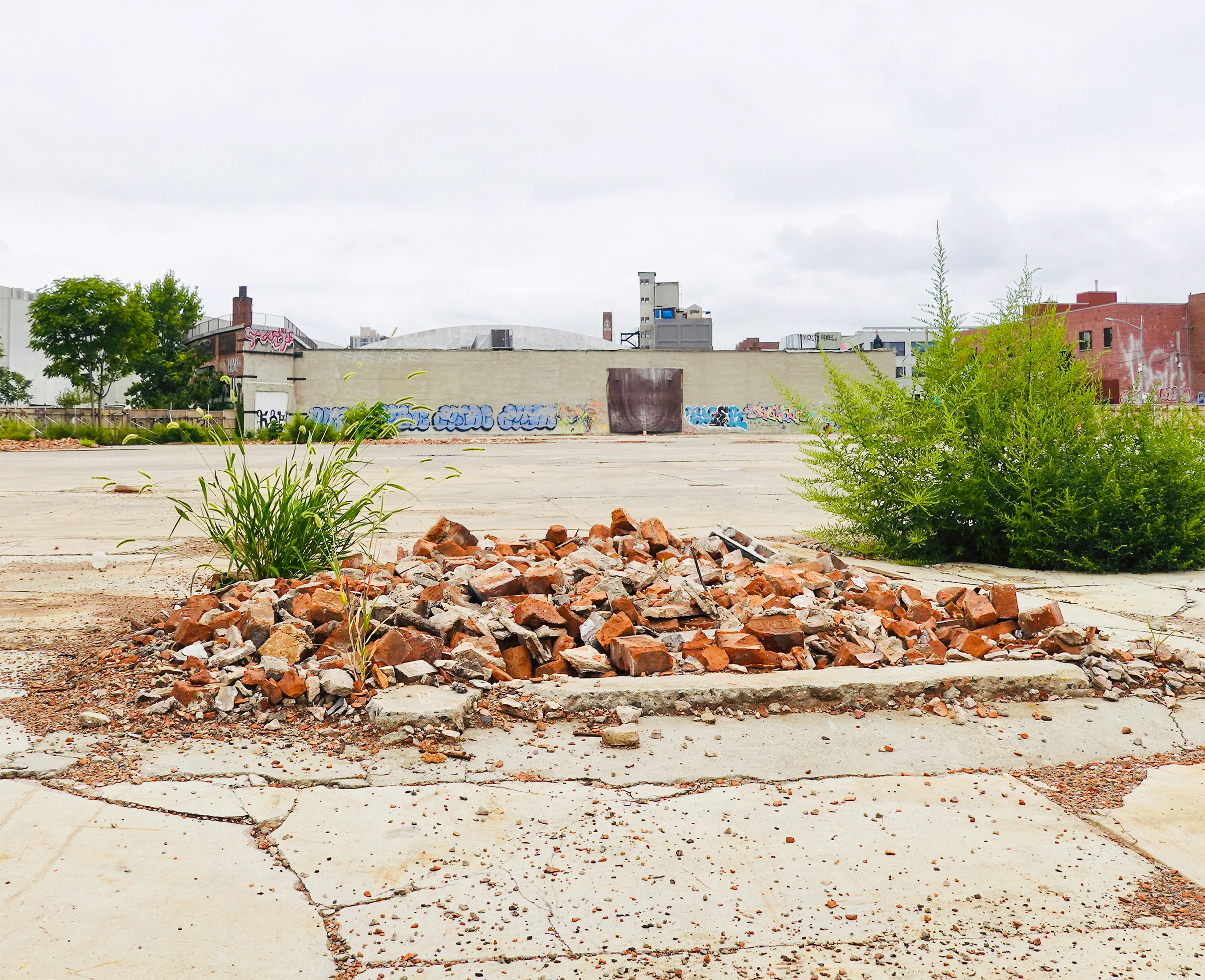
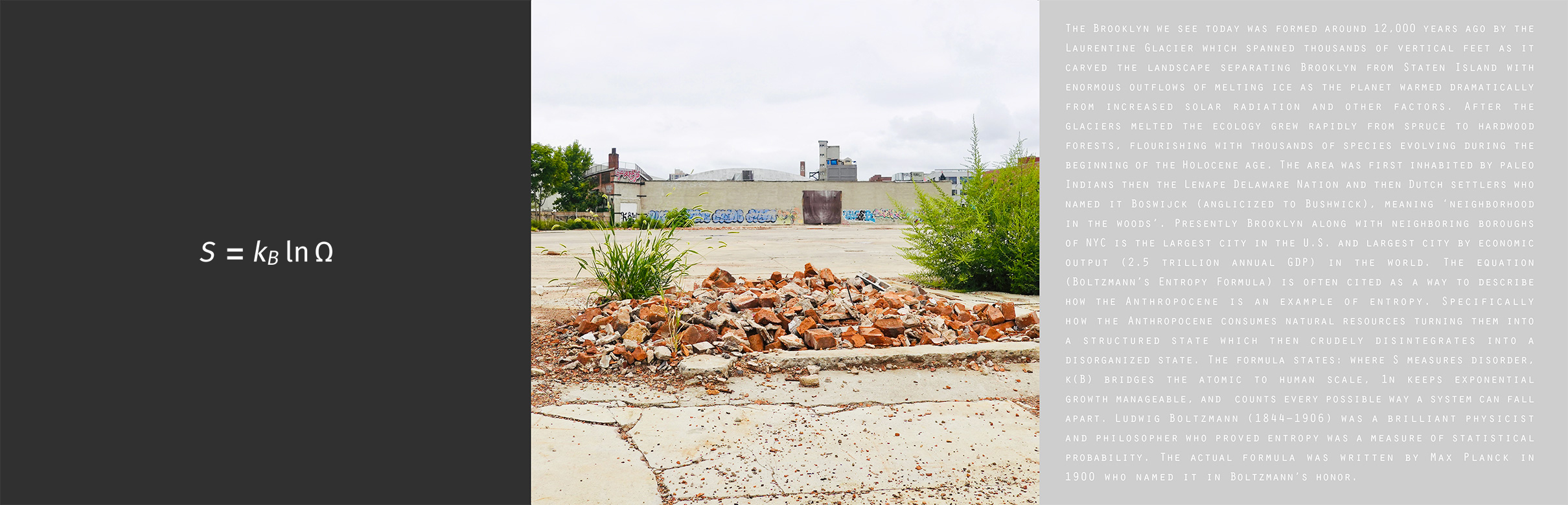
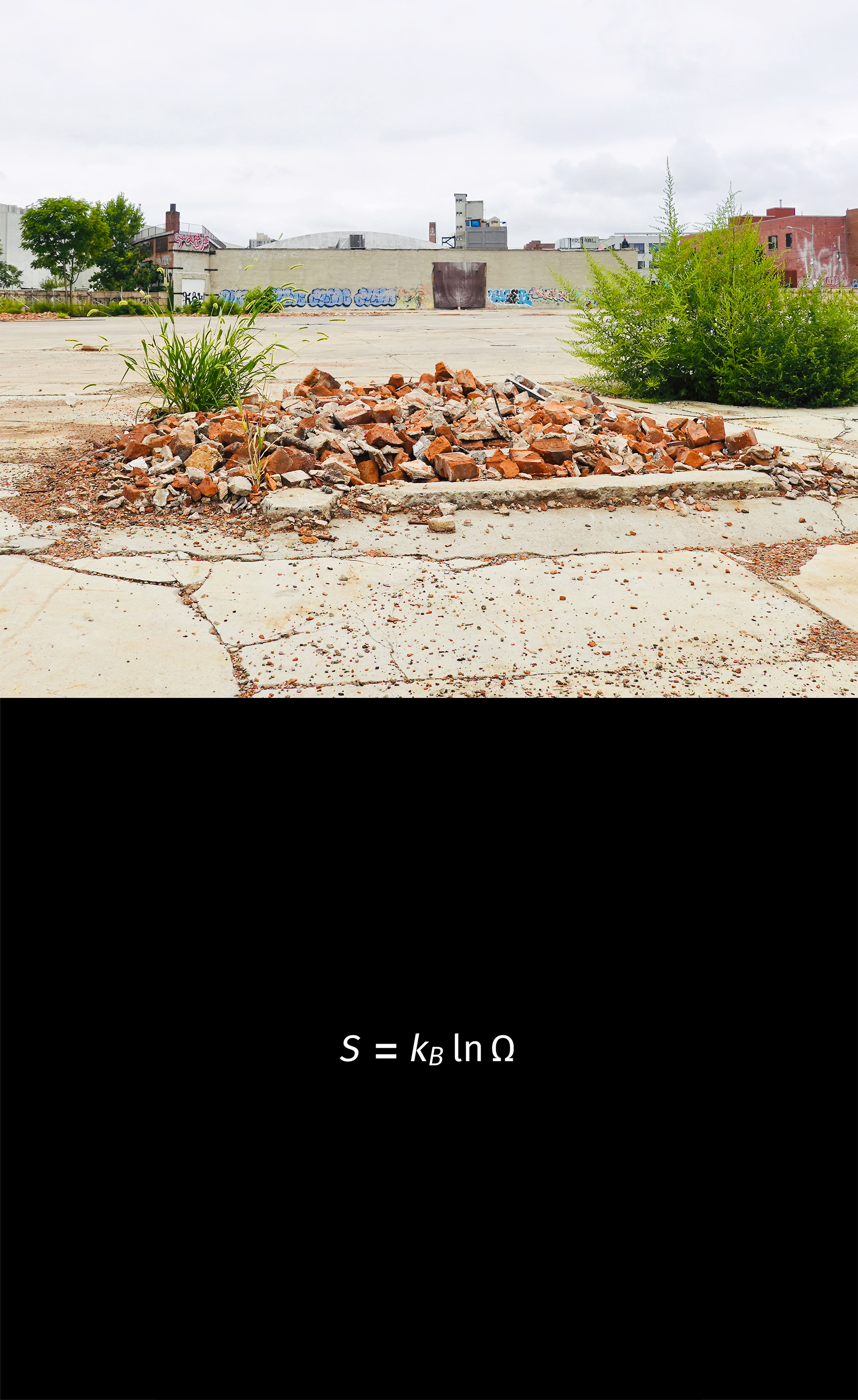
Bushwick Brooklyn paired with the Boltzmann’s Entropy Formula from the series A/12e (Anthropocene 12 equations) – section 01.
The Brooklyn we see today was formed around 12,000 years ago by the Laurentine Glacier which extended thousands of vertical feet as it carved the landscape separating Brooklyn from Staten Island with outflows of melting ice as the planet warmed from increased solar radiation and other factors. After the glaciers melted the ecology grew rapidly from spruce to hardwood forests with thousands of species evolving during the beginning of the Holocene age. The area was first inhabited by paleo Indians then the Lenape Delaware Nation and then Dutch settlers who named it Boswijck (anglicized to Bushwick), meaning ‘neighborhood in the woods’. Presently Brooklyn along with neighboring boroughs of NYC is the largest city in the U.S. and largest city by economic output (2.5 trillion annual GDP) in the world. The equation Boltzmann’s Entropy Formula is often cited as a way to describe how the Anthropocene is an example of entropy. Specifically how the Anthropocene consumes natural resources turning them into a structured state like buildings which then often disintegrate into a disorganized state before being rebuilt into a new building. The formula states: where S measures disorder, k(B) bridges the atomic (what we can’t see since it’s so small) to human scale (what we can see), ln (natural logarithm) keeps exponential growth manageable, and Ω counts every possible way a system can fall apart. Ludwig Boltzmann (1844–1906) was a physicist and philosopher who proved entropy was a measure of statistical probability. The actual formula was written by Max Planck in 1900 who named it in Boltzmann’s honor.