
Adaptation
from the series Selected Work, 2026, Limited Edition
ABOUT
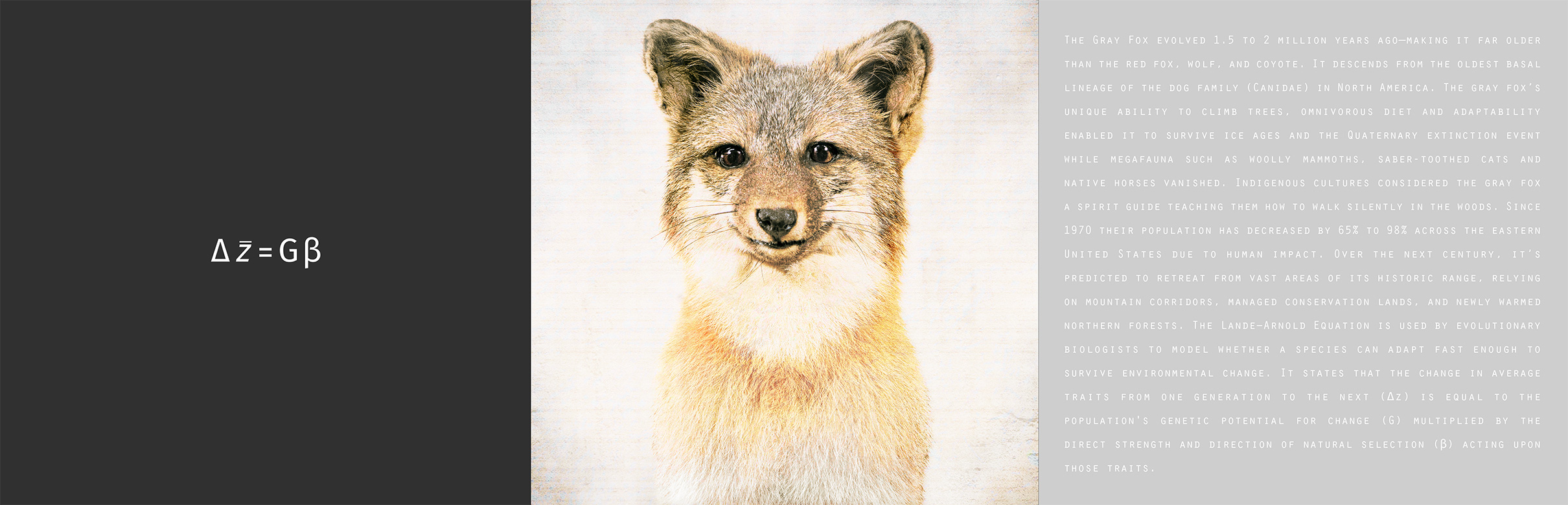
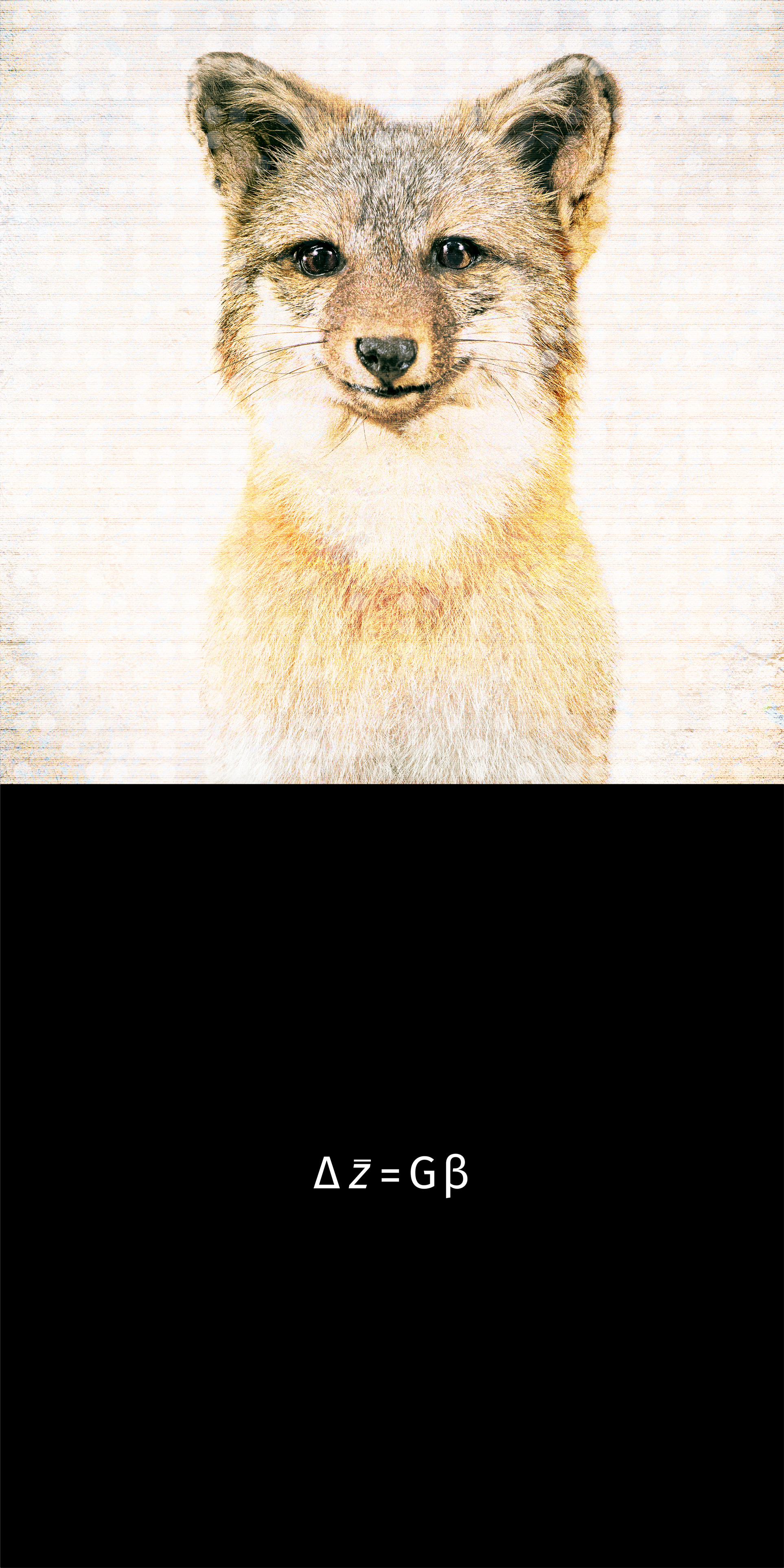
Gray fox paired with the Lande–Arnold Equation from the book A/12e (Anthropocene 12 equations) – section 08.
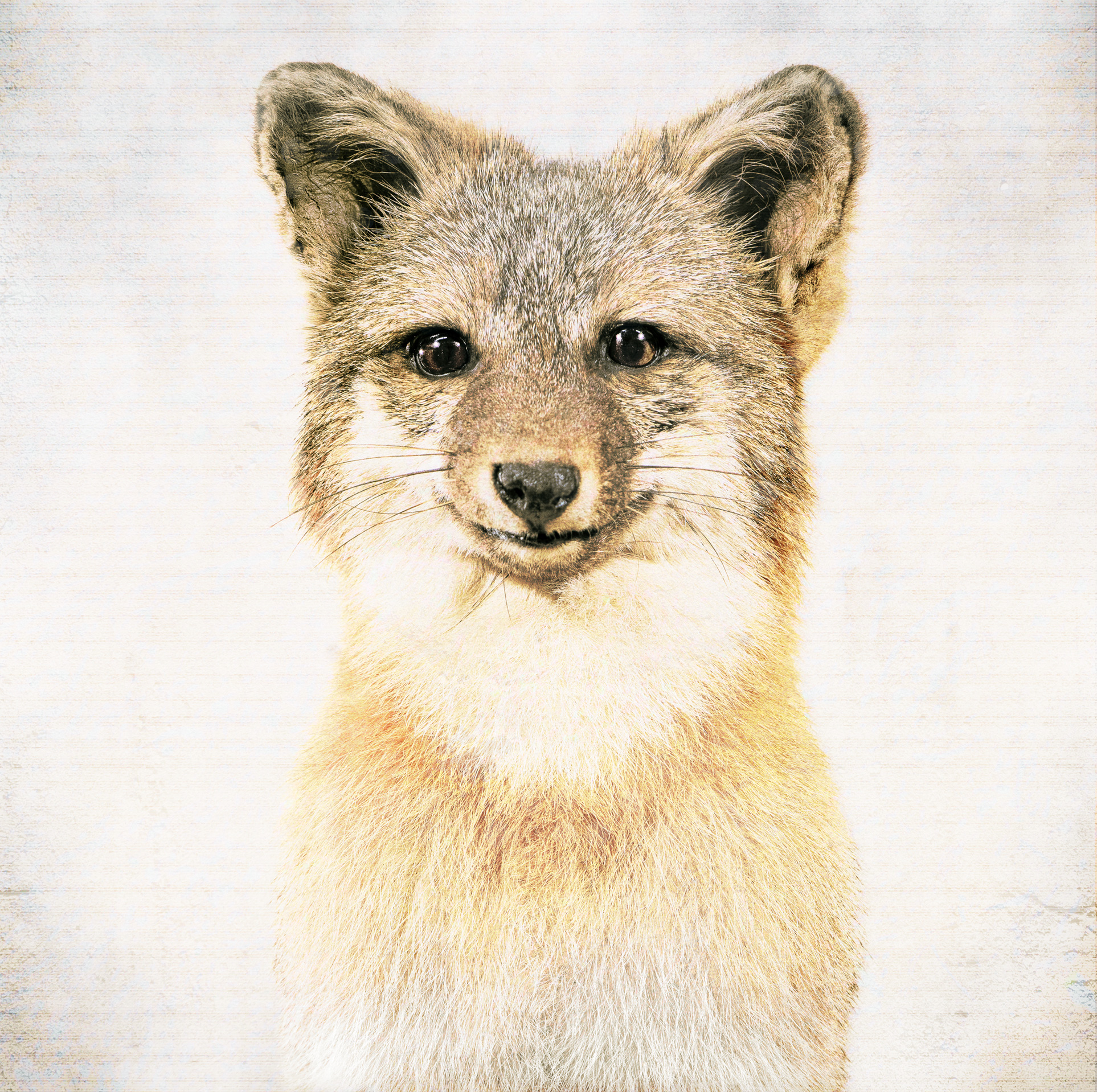
The Gray Fox evolved 1.5 to 2 million years ago making it far older than the red fox, wolf, and coyote descending from the oldest lineage of the dog family (Canidae) in North America. The gray fox’s unique ability to climb trees, omnivorous diet and adaptability enabled it to survive ice ages and the Quaternary extinction event while megafauna such as woolly mammoths, saber-toothed cats and native horses vanished. Indigenous cultures considered the gray fox a spirit guide teaching them how to walk silently in the woods. Since 1970 their population has decreased by 65% to 98% across the eastern United States due to human impact. Over the next century, it’s predicted to retreat from vast areas of its historic range, relying on mountain corridors, managed conservation lands, and newly warmed northern forests. Evolutionary biologists use the Lande-Arnold Equation to calculate whether a species can adapt fast enough to survive a changing environment. The formula compares how much a species’ traits shift from one generation to the next (Δz̄) by multiplying its genetic capacity to evolve (G) by the pressure of natural selection (β).
While the gray fox population is collapsing across much of the US there are few restrictions on hunting and a relatively small amount of conservation efforts. California and Illinois ban hunting the gray fox and Massachusetts, Colorado, Washington and Arizona ban body and foothold traps that are the only way to trap foxes. Gray foxes are often confused with red foxes which have a more stable population. The same survival skills that have allowed the gray fox to survive such as only coming out at night, have led to a lack of awareness and conservation efforts.
While often referred to as the Gray Ghost due to its silent, nocturnal and elusive nature, gray foxes are predicted to survive the Anthropocene like it has other environmental upheavals.
The gray fox was photographed at the RISD Nature Lab, thanks for providing this resource.